Before You Blame Your Hormones, Look at These 5 Things
Before You Blame Your Hormones, Look at These 5 Things
I hear some version of this all the time:
“I can’t sleep anymore. It has to be my hormones.”
“I’m gaining weight. It’s perimenopause.”
“I’m exhausted all the time. My hormones are a mess.”
And sometimes? Hormones absolutely are part of it.
But before we hand every symptom over to hormones, I think we need to ask another question:
What does your life look like right now?
How are you sleeping? What are you eating? Are you moving your body? Are you constantly stressed? Are you giving your body any chance to recover—or just pushing through every day?
Because hormones don’t exist separately from the rest of your body.
Aging is real. Hormone shifts are real. Your lifestyle is real too.
And while we can’t control every change happening inside our bodies, there is a hell of a lot we can influence.
1. How much are you actually moving?
Not: Did you work out twice this week?
I mean how much are you moving throughout your entire day?
You can do a 45-minute workout in the morning and still spend most of the remaining day sitting. Walking, taking the stairs, getting outside, carrying things, doing yard work, strength training—it all counts.
And as we get older, I think strength becomes especially important.
I’m not talking about trying to look like a fitness model. I’m talking about building and maintaining a body that’s capable.
Muscle is something I want more of as I age, not less.
Before assuming your changing body means exercise “doesn’t work anymore,” take an honest look at how much you’re moving and whether you’re giving your body a reason to stay strong.
2. What are you actually eating?
This is where people expect me to say:
Cut carbs.
Stop eating sugar.
Track everything.
Eat 150 grams of protein.
No.
Start simpler.
What does most of your food look like?
Are you eating enough protein? Are vegetables showing up regularly? Are most of your meals made from actual food—or are you grabbing whatever is easiest because you’re busy and starving?
How often are you snacking at night? How much added sugar has slowly crept in? Are you eating because you’re hungry or because food is sitting in front of you?
You don’t need to eat perfectly.
But “I eat pretty healthy” and actually looking at what you’ve been eating for the last few weeks can be two very different things.
Sometimes the first step isn’t dieting.
It’s just paying attention again.
3. How well are you really sleeping?
Hormone changes can absolutely affect sleep.
But so can scrolling in bed. Alcohol. Caffeine late in the day. Stress. An inconsistent sleep schedule. Staying up because it’s finally the only quiet part of your day.
That’s why I don’t love immediately blaming hormones when someone tells me they can’t sleep.
Maybe hormones are contributing.
And maybe there are also three things happening every night that aren’t helping.
Both can be true.
You don’t need a perfect nighttime routine with twelve supplements and a red light glowing beside your bed.
Start with the obvious stuff.
Give yourself enough time to sleep. Make the room dark. Put the phone down. Pay attention to caffeine and alcohol. Build some consistency.
Then see what’s left.
4. What does your stress actually look like?
Stress isn’t just having a terrible day.
It’s constantly rushing. Never having downtime. Worrying. Overcommitting. Being needed by everyone. Training hard while under-recovering. Sleeping poorly and then using caffeine to drag yourself through another day.
Sometimes we’ve lived that way for so long that it doesn’t even feel stressful anymore.
It just feels normal.
That doesn’t mean your body experiences it as normal.
You can’t remove every stressful thing from your life—and I’m definitely not going to tell a busy woman to simply “reduce her stress.”
But you can start noticing where your body never gets a break.
5. Are you giving yourself any chance to recover?
This one gets ignored.
We talk constantly about doing more.
More workouts. More steps. More protein. More productivity. More supplements. More routines.
But your body also needs opportunities to recover from everything you’re asking it to do.
Recovery can mean a rest day. An easier workout. Going to bed earlier. Eating enough. Taking a walk instead of crushing another workout. Sitting down for ten minutes without doing five other things.
Healthy isn’t just what you can push yourself to do. It’s also how well your body can recover from it.
So…is it your hormones?
Maybe.
Hormonal changes during perimenopause and menopause can affect things like sleep, body composition, temperature regulation, mood and other aspects of how you feel.
That’s real, and I’m not interested in dismissing it.
But I also don’t want women entering their 40s believing they have no control over what happens next.
Before blaming everything on hormones, look at the whole picture.
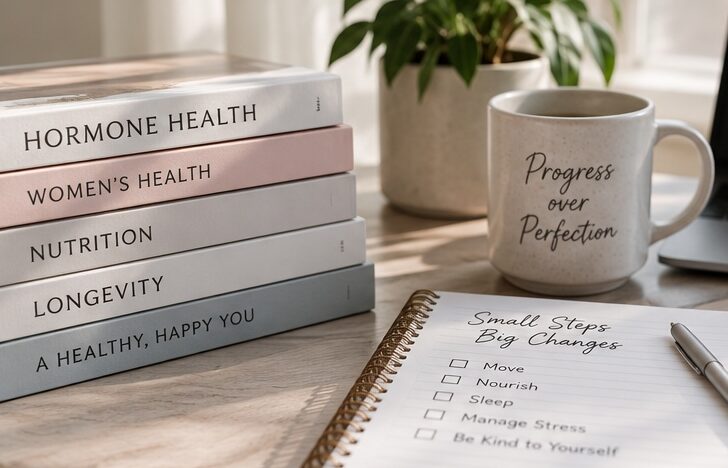
Movement.
Nutrition.
Sleep.
Stress.
Recovery.
You don’t have to fix all five tomorrow.
Pick the one that’s clearly asking for your attention and start there.
That’s really what Get It Health means to me.
Understand what’s happening. Learn what you can influence.
Then do something about it.